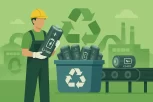

How Lithium Battery Recycling Helps Save the Environment

More and more electric vehicles (EVs), mobile devices, and energy systems are using lithium-ion batteries. But this growth raises another question: how do we responsibly get rid of lithium-ion battery waste?
Recycling lithium batteries is the answer. It helps the circular economy, cuts down on environmental damage, and saves raw materials. Working with a trustworthy lithium-ion battery recycler like CWRI (Clean Waste Recycling India Pvt. Ltd.) is good for businesses, manufacturers, and governments because it makes sure that things are done right, that they last, and that they are worth more in the long run.
List of Contents
What is CWRI Lithium Battery Recycling?
Benefits to the environment of recycling lithium batteries
- Lowering the amount of greenhouse gases released
- Stopping soil and water from getting dirty
- Recycling lithium batteries cuts down on electronic waste
- Support for a circular economy that lasts
The social benefits of recycling lithium batteries
- Making jobs
- Better working condition
- Help for clean energy
- Less Dependence on Imports
- Morality, Traceability, and Openness
Welcome to CWRI Lithium Battery Recycling
Clean Waste Recycling India Pvt. Ltd. (CWRI) is a safe lithium-ion battery recycling plant in Delhi that helps industries, OEMs, and energy companies deal with lithium battery scrap in ways that are safe for the environment. CWRI gives you:
- Recycling Li-ion batteries for electric vehicles, electronics, and energy storage
- Recycling of lithium-ion batteries for industrial use on a large scale
- Collection and shipping of lithium-ion batteries
- How to safely throw away and treat lithium-ion batteries
- Getting back important raw materials like lithium, cobalt, and nickel
As a trusted lithium battery recycling partner in India, CWRI offers certified services and helps businesses follow CPCB and EPR rules.
Recycling lithium batteries is good for the environment.
Lessening of Greenhouse Gas Emissions
Recycling lithium-ion batteries can cut greenhouse gas emissions by up to 81% compared to mining new raw materials. Also:
- The amount of energy used goes down by 77% to 89%.
- Water use goes down by 72% to 88%.
- Less pollution, like sulphur and particulate matter, is released into the air.
The lithium-ion recycling work that CWRI does helps businesses lower their carbon footprints and meet national climate goals. This reduction in emissions is an important part of India’s clean energy mission as more electric cars hit the road and solar power grows.
Stopping the pollution of soil and water
When lithium-ion batteries are thrown away the wrong way, they leak harmful metals like lithium, cobalt, and nickel into the soil and groundwater. This is bad for both ecosystems and human health. These metals can pollute farms, kill fish and other aquatic life, and get into the food chain.
CWRI makes sure
- Disposal of lithium batteries in a way that is good for the environment
- Safe removal of scrap lithium batteries that can be recharged
- No landfills and safe storage of dangerous waste
Major brands and institutional buyers trust CWRI as one of the best lithium battery disposal companies in India.
Lithium battery recycling cuts down on electronic waste.
Every year, millions of lithium batteries stop working. Throwing them away in landfills makes India’s e-waste problem worse and puts a lot of stress on the systems that deal with trash.
CWRI helps lower this by:
- Taking care of lithium-ion battery waste from OEMs, electric vehicle makers, and solar companies
- Handling bulk lithium-ion battery collection
- Taking out metals and parts that can be used again in the future
Recycling these materials makes them last longer and takes a lot of stress off of the mining industry. It turns trash into useful things and keeps bad things out of the environment
Support for a circular economy that lasts
CWRI helps the circular economy by getting back important materials and putting them back into the production cycle. This:
CWRI makes sure
- Lessen reliance on virgin mining
- Reduces the cost of making things overall
- Adds years to the life of raw materials
Businesses that work with CWRI to recycle lithium-ion batteries cut down on waste and help the environment in the long run. It also helps businesses reach their ESG goals and show that they care about being environmentally friendly
Social Benefits Of Lithium Battery Recycling
Making Jobs
The lithium battery recycling industry is growing quickly and needs a lot of workers. CWRI is creating green jobs by:
- Technicians at recycling plants who are skilled
- Trained teams for logistics and collection
- Working together with local agencies and contractors
Recycling creates jobs in both rural and urban areas and helps build a skilled green workforce. The work that CWRI does helps to make the job market more diverse for clean-tech and sustainability jobs.
Better working conditions
Unlike informal or unregulated recyclers, CWRI follows strict rules for safety and the environment. The plant makes sure that:
- How to take things apart safely
- Personal protective gear (PPE)
- Systems for keeping an eye on occupational health
OEMs who want lithium-ion battery recyclers who follow fair labour standards can trust CWRI because of this. Workers learn how to safely handle dangerous materials and get the benefits of structured work.
Help for Renewable Energy
India is quickly building solar, wind and electric vehicle infrastructure, so it’s very important to find a way to deal with used batteries. CWRI plays a vital role in:
- Recycling batteries from electric vehicles, solar panels, and the grid
- Making sure that battery waste doesn't hurt the environment
- Helping people who use renewable energy close their material loop
Recycling lithium-ion batteries keeps clean energy systems clean for their whole life. CWRI makes that possible by making energy storage last longer.
Reduced Reliance on Imports
India gets most of its lithium and cobalt from other countries. These are important for making batteries. CWRI helps lessen this reliance by:
- Recovering valuable materials from lithium-ion battery scrap
- Providing recycled metals for local businesses to use
- Cutting down on risk and cost in the supply chain
This supports India’s economic independence and protects industries from global market volatility. It also helps create a local ecosystem for making batteries and electric vehicles.
Ethics, Traceability, and Openness
CWRI stands out because it is dedicated to responsible recycling. It offers:
- Complete traceability of materials
- EPR (Extended Producer Responsibility) compliance paperwork
- Ethical sourcing and environmental reporting
OEMs and energy companies in India who need clear, verifiable processes and a dependable lithium-ion battery recycling service can use CWRI’s systems. It helps clients meet both environmental standards and rules.
Conclusion
Recycling lithium batteries is not just something you have to do; it’s something that needs to be done for the environment and the economy in the long run. CWRI provides a comprehensive, reliable solution for companies looking to safely recycle lithium-ion batteries, reduce emissions, and conserve resources.
As more people want to recycle EV lithium batteries and rules get stricter, CWRI is ready with advanced systems for collecting, treating, and recovering lithium-ion batteries. With its presence near Delhi and expertise in handling both industrial lithium-ion battery recycling and rechargeable lithium battery scrap disposal, CWRI is leading the charge for a cleaner India.
By working with CWRI, businesses can reach their sustainability goals, lower their operational risks, and help build a green, circular economy.
CWRI is your trusted lithium battery recycling partner in India — enabling safe, smart, and sustainable solutions for the future